What is barefoot and how can it help you
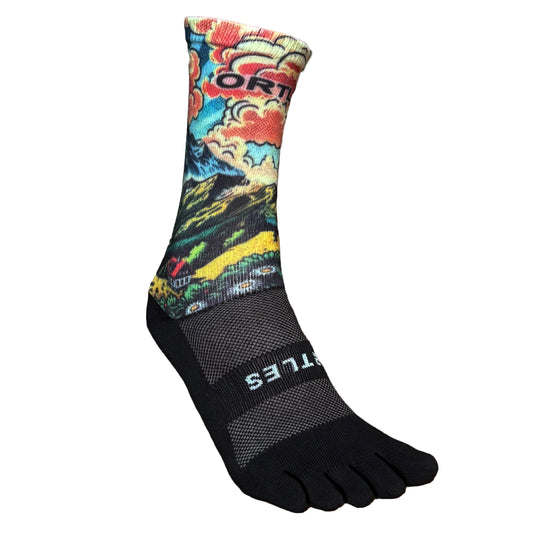
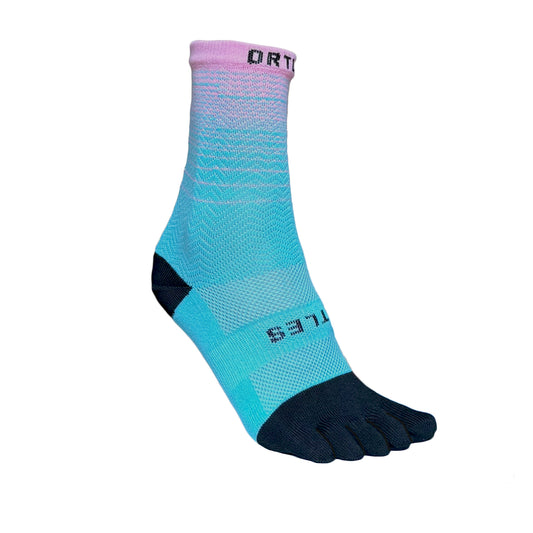
Barefoot is the practice of walking or running by maximizing the musculature and anatomical structure of the foot, reducing the interference of traditional footwear. This style encourages a forefoot or midfoot strike, strengthens the small intrinsic muscles of the foot, improves balance, and reduces impact force on the joints. Five-toe socks come into play as an ideal support for this philosophy: by separating each toe, they maintain skin breathability, limit interdigital friction, and ensure minimal protection from debris, while still maintaining the tactile sensitivity typical of the bare foot.

What is barefoot
Barefoot consists of walking or running without conventional footwear, relying on the bare foot or extremely minimalist footwear to encourage a natural strike. This approach is based on the idea that, throughout human evolution, man has always moved without shoes, developing a foot capable of absorbing shock and distributing loads efficiently. Biomechanical studies show that barefoot encourages a forefoot or midfoot strike, with shorter and more frequent steps, reducing collision forces on the knee and hip.
Much research highlights an improvement in postural control thanks to greater proprioception: the foot, in direct contact with the ground, sends valuable sensory information to the central nervous system to adapt body posture. Other studies suggest an optimization of running efficiency, with a decrease in ground contact times and an increase in cadence. However, barefoot is not without risks: the lack of protection exposes one to cuts, abrasions, and stress injuries in the event of too rapid a transition.
Why choose five-toe socks
Five-toe socks, also known as toe socks, represent a bridge between the freedom of the bare foot and the necessary protection in urban or natural environments with debris. By separating each toe, they reduce the interdigital rubbing that can cause blisters and irritation, while keeping the foot's tactile ability to perceive the ground intact. The breathable and moisture-wicking material helps keep the skin dry, preventing bacterial growth and bad odors.
Thanks to their slim design, toe socks have a "zero drop" (no difference in height between heel and toe), respecting the body's natural alignment and favoring a neutral strike. Furthermore, they provide light compression that stimulates blood circulation and supports the intrinsic ligaments of the foot, enhancing its stability. Those who wear them report a smoother walking or running experience, with a feeling of "direct contact" with the ground, attenuated only by a minimal protective layer.
Combined benefits of barefoot and toe socks
The combination of barefoot and five-toe socks maximizes functional results: the foot works autonomously, strengthening intrinsic musculature and improving balance, while toe socks mitigate the risks of minor trauma. This approach induces a gradual adaptation, avoiding the abrupt transition to completely bare footwear and reducing the incidence of stress injuries.
Studies show that during the transition to barefoot, the use of minimalist footwear or protective socks decreases the likelihood of developing tendonitis or stress fractures, because the foot strengthens progressively. In the long term, there is an improvement in foot functionality and greater resilience to repetitive loads.
How to integrate barefoot with toe socks
To start, it is advisable to walk or run for a few minutes a day on soft surfaces (grass, sand, carpets), wearing toe socks to protect against debris without losing sensitivity. Increase duration and distance gradually, listening to your body and slowing down in case of acute pain. Incorporate foot strengthening and mobility exercises, such as toe raises and calf stretches, to facilitate adaptation.
In urban environments, five-toe socks can be worn alone or under a minimalist shoe, offering protection from hot asphalt or small stones. The goal is to maintain the barefoot motor pattern—neutral strike and high cadence—while ensuring adequate comfort.

Barefoot rediscovers the primitive functionality of the foot and its biomechanical and postural benefits, while five-toe socks enhance its effectiveness as a minimal protective layer. By integrating these toe socks into your barefoot training routine, you create an optimal balance between freedom of movement, protection, and injury prevention.
Happy awakening for your feet!